8 March 2025
Redbreast Lustau Edition


The latest spirit on my quest to become a Whisky Centurion is also a first - an Irish whisky (or should I say whiskey!). This spirit - Redbreast Lustau - is produced at the Midleton distillery in Cork alongside a variety of other whiskeys sold by Irish Distillers. Many of the bottles of Irish whiskey available today are made in column stills due to their efficiency and economy, yet Irish Distillers has maintained Redbreast on the more traditional pot still. The only difference in the production process between this spirit and a single malt that you would find in Scotland is that the mash contains a mixture of both malted and unmalted barley.
Now that’s out of the way, the real point of note for this expression is the ‘Lustau Edition’ name. The spirit is initially aged for between 9 and 12 years in traditional bourbon and sherry casks before being moved into first-fill sherry butts previously used by the prestiguous Bodegas Lustau in Jerez. The intention here is to give the final spirit a more refined flavour with greater depth. Let’s see if it worked…
Bottle
One thing I’ve noticed about Irish whiskey is that it is frequently bottled in coloured glass. Jameson, Waterford, Teeling and of course, as you can see, Redbreast. Whilst there are definitely some opaque bottles that I love (I’m thinking Bruichladdich Classic Laddie and Glenfiddich Project XX), I do much prefer a clear bottle, especially when I don’t feel like the colour of the glass is for a particular stylistic statement. That being said, I love the orange of the foil and label, making this expression distinguishable in Redbreast’s lineup. I’m also a sucker for embossing on bottles so love the name neatly set around the shoulder. It’s certainly a bit of a mixed bag.
Colour
I can’t find any official information on colouring, but I’m led to believe that this dram is naturally coloured (as well as being non-chill-filtered) and is a tad on the dark side of sherry and muscat on the colour scale. Maybe bordering on tawny!
Nose - Unsurprisingly, there are plenty of notes from the sherry casks. Lots of rich, dark fruits. A good dose of liquorice and a little almond or marzipan.
Palate - Very smooth in the mouth, with a good dose of peppercorn up front, but the body of the dram is still rich and fruity with plenty of plums and prunes.
Finish - A deliciously long finish and as the fruitiness fades away you’re left with the peppercorn and allspice, and that hint of liquorice is still there till the end.
Overall
This is a delicious whiskey and certainly offers something different. After leaving the dram in the glass a little longer, the liquorice becomes more pronounced, a flavour I really enjoy. For a first foray into Irish whiskeys, I feel like I’ve hit the jackpot.
The only stumbling block I have is the price. At nearly £70, this is a really expensive whiskey. Yes - it offers something above what you would get for £40-£50, but it doesn’t feel like a premium spirit. I’m definitely intrigued to try some of the other expressions from Redbreast, and I will enjoy this bottle while it lasts, but it's probably not one I will be rushing to restock when it’s gone.
Comments
Loading comments…
Leave a comment
Fancy another dram?

Compass Box Orchard House
Compass Box divides opinion — boundary-pushing innovators to some, fancy bottles and marketing to others. Orchard House is their fruit-forward blended malt, and it's exactly what it promises: bright apple, pear and pineapple over golden syrup and buttery pastry, finishing on fruit and vanilla buttercream. A genuinely easy-drinking showcase of Scotch's lighter side — but is bright and breezy enough to win me over?
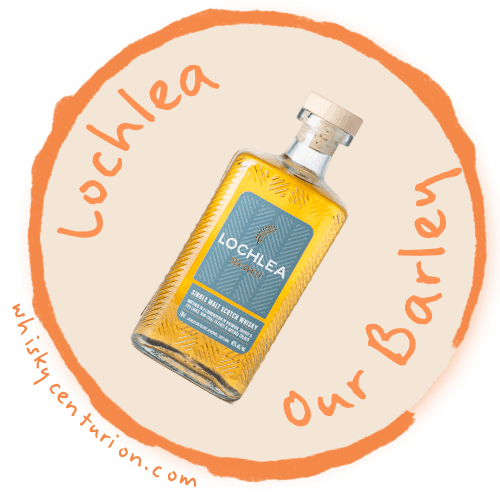
Lochlea Our Barley
Lochlea keeps cropping up. This young Ayrshire distillery only started in 2018 but already does things differently — growing its own barley on the estate for control over the whole process. The farm-to-bottle care shows: pear and orange marmalade, an oily palate of golden syrup, buttered soda bread and almonds, and a long, peppery-barley finish. A genuinely impressive dram for such a young name.
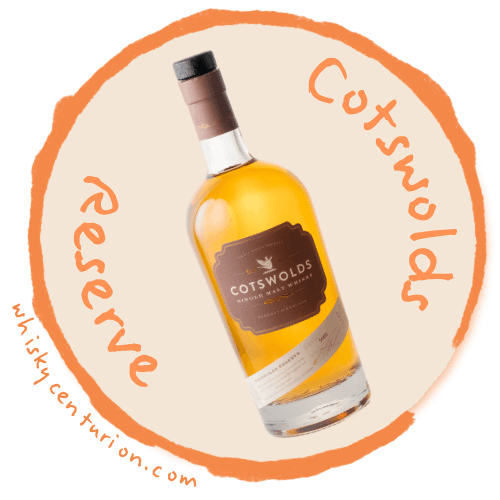
Cotswolds Reserve
This week I'm trying something a little different — an English single malt. There are fewer than 50 active whisky distilleries in England, around a third the number in Scotland, but that isn't the whole story: most of them, the Cotswolds included, are less than 10 years old (I could find only two releasing whisky before 2017!). A very young industry indeed.